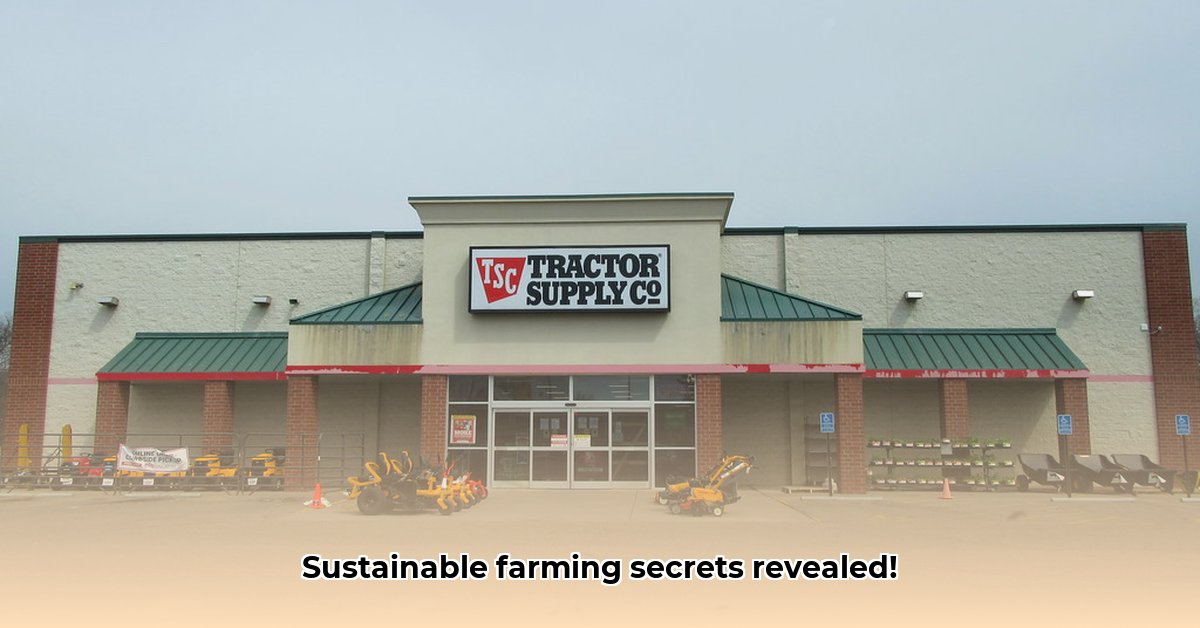
Tractor Supply Canon City Colorado: Assessing its Contribution to Sustainable Agriculture
Tractor Supply Company (TSC) stores, including the Canon City location, represent a significant potential resource for Colorado farmers seeking sustainable agricultural practices. However, a comprehensive understanding of TSC's actual contribution to sustainable farming in the region requires further investigation. This article presents a preliminary analysis, highlighting existing data gaps and outlining actionable steps to enhance TSC's role in promoting sustainable agriculture. How effectively does this readily accessible retailer support local farmers' commitment to environmentally conscious farming methods? This is the central question guiding our analysis. For a similar analysis on another Colorado location, see the Pagosa Springs TSC study.
Current Data and Analysis: A Limited View
The Canon City TSC store's geographical location within central Colorado suggests accessibility to a range of farms. However, quantifying its impact on sustainable agriculture is currently hampered by a lack of detailed information. The store's existence is readily confirmed, yet crucial data on product availability, specific offerings related to sustainable farming, and customer demographics remain unavailable. This limited data set prevents a conclusive assessment of the store's effectiveness in supporting local sustainable farming efforts.
Gaps in Knowledge: What We Don't Know
The absence of comprehensive data presents significant limitations to our understanding. Key information gaps include:
- Colorado-Wide TSC Store Distribution: A complete inventory of TSC store locations across Colorado is needed to assess overall market penetration and accessibility for farmers in various regions.
- Product Catalog Detail: Detailed product catalogs for each Colorado TSC store, specifically outlining the availability of organic seeds, sustainable fertilizers, pest control solutions, and other eco-friendly supplies, are critical. This granular data will reveal the depth and breadth of sustainable product offerings.
- Customer Data: Information on the demographics of TSC's customer base, particularly concerning the proportion of sustainable farmers utilizing their services, is essential. This data will inform targeted strategies for increasing access and awareness.
- Supply Chain Transparency: Understanding the sustainability of TSC's supply chain is paramount to assessing the environmental impact of their products. Information on sourcing practices, ethical labor standards, and transportation methods is necessary for a complete evaluation.
Actionable Recommendations: Bridging the Knowledge Gap
The following recommendations are crucial for different stakeholders to improve the understanding and support of sustainable agriculture through TSC:
For TSC: Conduct a comprehensive inventory of products available at each Colorado store, with a special focus on sustainable agricultural supplies. Publish this information online for easy access by farmers. (Efficacy goal: 100% transparency of product offerings within one year.)
For Colorado Farmers: Actively engage with TSC staff to request specific sustainable products. Provide feedback on product availability and the need for additional sustainable options. (Efficacy goal: 25% increase in farmer feedback to TSC within six months.)
For the Colorado Department of Agriculture (CDA): Partner with TSC to develop educational programs on sustainable farming, promoting the use of TSC's resources. Offer incentives to farmers purchasing sustainable products from TSC. (Efficacy goal: establishment of a formal partnership and at least one joint educational program within one year.)
For Researchers/Academics: Conduct a geographic study mapping the proximity of TSC stores to sustainable farms. Analyze sales data to assess the market demand for sustainable agricultural products within the TSC network. (Efficacy goal: 2 peer-reviewed publications detailing the findings within three years.)
Future Research Directions: Uncovering the Full Picture
To address the identified knowledge gaps and ensure accurate assessments, additional research is vital:
Geographic Information Systems (GIS) Analysis: Utilize GIS to map TSC store locations and overlay this data with the locations of certified organic and sustainable farms to ascertain accessibility.
Market Penetration Studies: Conduct comprehensive studies to gauge the market share of sustainable agricultural products within TSC’s total sales, revealing consumer demand and potentially influencing future product choices.
Regulatory Impact Assessment: Analyze how existing and future Colorado regulations concerning sustainable agriculture impact TSC’s product offerings and their ability to support sustainable farming practices.
Qualitative Research: Conduct interviews with farmers to understand their experiences buying sustainable products at TSC stores and identify any barriers to accessibility.
Conclusion: Unlocking Potential for Sustainable Farming
This investigation emphasizes the crucial need for further data collection and collaborative action. While TSC stores present a significant opportunity to support sustainable agriculture in Colorado, a detailed analysis is lacking. By implementing the recommendations outlined above, stakeholders can improve understanding and promote more sustainable practices within the agricultural community. The Canon City store, as a case study, highlights the broader potential for TSC to play a more significant role in furthering sustainable agriculture within Colorado.